There was a time when patients had no option but to visit the hospital physically for everything — booking appointments, rescheduling visits, canceling consultations, checking doctor availability, or asking for basic information.
But today, patient expectations have changed.
Now, patients want quick answers over a phone call. They want fast appointment booking, instant confirmations, and smooth communication.
Unfortunately, traditional hospital phone systems often create frustration. Calls go unanswered, Lines stay busy,Patients are kept on hold, Front-desk staff are overwhelmed.
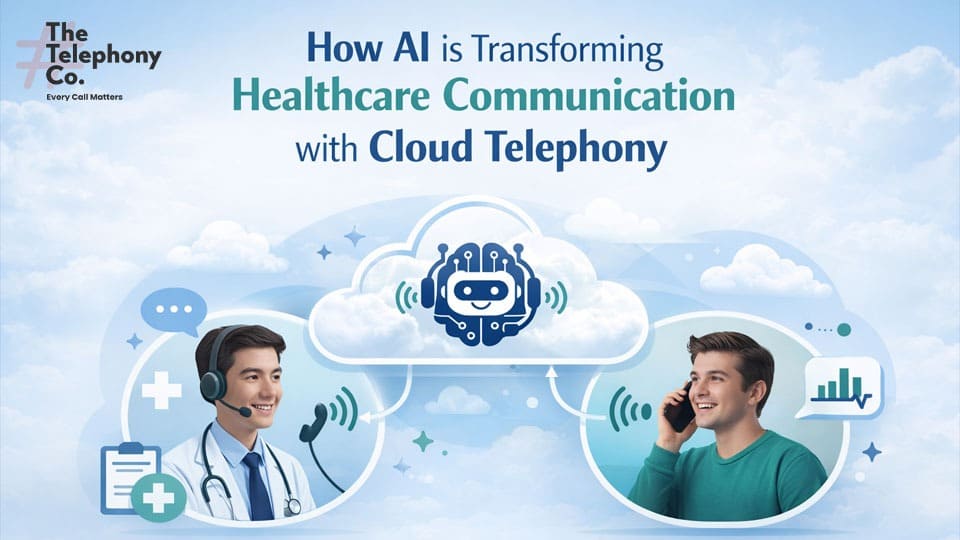
The good news: traditional phone systems era is ending. AI in healthcare communication, delivered through modern cloud telephony for hospitals, is fundamentally changing how patients connect with care providers — and how healthcare teams work behind the scenes. This article breaks down exactly how that transformation is happening, what it means for your facility, and why getting ahead of this shift matters more than most administrators realise.
Why Healthcare Communication Is Still Broken
Most hospitals have advanced medical equipment, digital records, and specialized doctors. Yet communication systems often remain outdated.
Here are some common challenges healthcare administrators face:
- High call abandonment rates mean patients cannot reach you when they need to
- Manual appointment scheduling creates bottlenecks and human errors
- No-shows spike when reminders are not sent or are sent too late
- Staff burn out handling repetitive, low value calls that AI could easily manage
- Multi-branch healthcare networks struggle with siloed, uncoordinated communication
Even large hospitals struggle with inefficient call handling. Traditional phone systems are limited. They cannot intelligently route calls, automate repetitive tasks, or provide real-time insights.
Patients expect quick, smooth communication. When they don’t get it, satisfaction drops.
Healthcare delivery starts long before treatment. It starts with the first phone call.
Transform Communication with AI-Powered Cloud Telephony
 Intelligent Automation
Multi-Branch Control
Data-Driven Insights
Intelligent Automation
Multi-Branch Control
Data-Driven InsightsTransform Communication with AI-Powered Cloud Telephony
Intelligent Automation
Multi-Branch Control
Data-Driven InsightsWhat Is Cloud Telephony in Healthcare?
Cloud telephony for hospitals means moving your entire phone infrastructure off legacy hardware and onto a secure, internet-based platform. Instead of owning and maintaining physical switchboards and wiring, your calls, routing logic, recordings, analytics, and integrations all live in the cloud — accessible from anywhere, on any device.
The practical difference is significant. With traditional PBX systems, adding a new line means calling a technician and waiting days. With cloud telephony, you can add numbers (Virtual local and & toll free), departments, or even new branch locations in minutes from an admin dashboard.
A modern cloud-based healthcare call management system empowers hospitals to:
- Handle multiple calls simultaneously
- Route calls to the right department
- Record conversations for quality checks
- Monitor call data and performance
- Connect multiple branches under one system
It becomes a structured patient communication system instead of a simple phone line.
How AI-Powered Cloud Telephony Is Making a Real Difference in Healthcare Communication
When AI integrates with cloud telephony for hospitals, communication becomes smart, automated, and scalable.
1. AI Voice Assistant for Hospitals: Your 24/7 Front Desk Agent
Imagine having a front desk agent who never sleeps, never gets frustrated, and can handle hundreds of calls simultaneously. That’s exactly what an AI voice assistant for hospitals delivers.
These AI-powered virtual agents can:
- Answer common questions (timings, location, doctor availability)
- Confirm appointments
- Collect patient details
- Provide test report updates
- Offer multilingual support
Unlike traditional IVR systems that feel robotic and rigid, AI voice bots understand natural language. Patients can speak normally, and the system responds intelligently.
2. Automated Appointment System: Say Goodbye to No-Shows
One of the biggest financial headaches for any healthcare facility is appointment no-shows. Studies suggest that no-shows cost the healthcare industry billions of dollars each year. An automated appointment system directly tackles this problem.
Here’s what an AI automated appointment system can do:
- Send SMS and voice reminders 24–48 hours before appointments
- Allow patients to confirm, reschedule, or cancel via a simple keypress or voice command
- Automatically fill cancelled slots from a waitlist
- Send post-appointment follow-up messages for feedback or next steps
No manual entry. No miscommunication. Patients can book appointments even after working hours.
 Also Read: Cloud Telephony for Multi-Location Hospitals
3. Healthcare Call Management System: Smart Routing, Better Outcomes
A modern healthcare call management system is far more than a switchboard. With AI embedded into the routing logic, every call gets handled intelligently — based on urgency, patient history, department availability, and even time of day.
With AI-powered call routing:
- The system identifies why the patient is calling
- Routes emergency cases immediately
- Connects billing queries to the finance team
- Sends appointment-related calls to scheduling
For example, if a patient calls flagging chest pain symptoms, an AI-powered system can immediately recognize the urgency and route them to an emergency line — bypassing general queues. For routine queries, the system can handle them automatically or route them to the right department without any manual intervention.
4. Improving Internal Communication Across Departments
AI in healthcare communication isn’t just about talking to patients. It transforms how your teams talk to each other.
Cloud telephony platforms offer
- integrated messaging
- call conferencing
- team-based call queues
all accessible from any device, whether staff are at a desk, on a ward, or working remotely.
AI can also flag urgent internal messages, automate shift handover notifications, and ensure critical information reaches the right person at the right time. This level of coordination reduces errors and saves lives.
Real Benefits Healthcare Facilities Are Seeing Right Now
Hospitals and clinics that have already adopted AI-powered cloud telephony are reporting measurable results. Here’s a snapshot of what’s possible:
- Up to 60% reduction in call wait times through intelligent routing and AI handling
- 40–50% fewer missed appointments thanks to automated reminders and easy rescheduling
- Significant staff time savings, as routine calls are handled without human involvement
- Improved patient satisfaction scores, driven by faster, more consistent service
- Better compliance and documentation, with every call logged, recorded, and searchable
- Scalability without infrastructure headaches — add lines or locations in minutes, not weeks
Is Cloud Telephony the Right Move for Your Facility?
Whether you run a single-specialty clinic or a multi-location hospital network, AI-powered cloud telephony scales to fit your needs. It’s not just for large enterprises — even small and mid-sized clinics are seeing a strong return on investment from deploying even a basic automated appointment system or AI voice assistant.
Ask yourself:
- Are your patients frequently complaining about long hold times or missed calls?
- Is your staff spending too much time on routine call tasks instead of patient care?
- Are no-shows eating into your revenue and disrupting your scheduling?
- Do you need better visibility into your communication workflows?
If you answered yes to any of these, it’s time to explore what modern cloud telephony and AI can do for your facility.
Future of AI in Healthcare Communication
AI in healthcare communication is still evolving.
- Voice-based patient identity verification
- AI-driven emotional tone detection
- Personalized communication journeys
- Predictive health follow-ups
- Deeper integration with hospital management systems
Communication will move from reactive to proactive.
Instead of waiting for patients to call, AI systems may initiate preventive follow-ups based on medical history.
Conclusion: Modern Healthcare Needs Modern Communication
Healthcare excellence is not only about advanced treatment. It is also about accessibility and responsiveness.
When patients struggle to reach your hospital, trust begins to weaken.
AI in healthcare communication, combined with cloud telephony for hospitals, is not a luxury anymore. It is becoming an operational necessity.
From smart appointment scheduling to predictive analytics, AI-powered communication systems help hospitals:Reduce operational stress, improve patient satisfaction, lower missed appointments, centralize multi-branch operations, gain data-driven insights
The future of healthcare communication is intelligent, automated, and patient-focused.
Hospitals that modernize their communication infrastructure today will lead tomorrow’s patient experience.
At The Telephony Co., we believe healthcare deserves communication systems as advanced as its medical technology. If you are planning to upgrade your patient communication system, now is the right time to explore how AI-powered cloud telephony can transform your operations — step by step, without disrupting patient care.
Frequently Asked Questions
How is AI different from traditional IVR in hospitals?
Traditional IVR follows fixed menu options. AI voice assistants understand natural language, identify patient intent, and provide dynamic responses without rigid button-based navigation.
Is cloud telephony for hospitals secure?
Yes. Reputable providers use encrypted communication, secure data storage, and follow healthcare data compliance standards to protect patient information.
At The Telephony Co, our cloud telephony solutions are built with enterprise-grade security and secure call management systems to ensure complete data protection for hospitals.
Will AI replace hospital reception staff?
No. AI reduces repetitive workload. Staff can focus more on patient care, in-person interactions, and complex cases while automation handles routine tasks.