
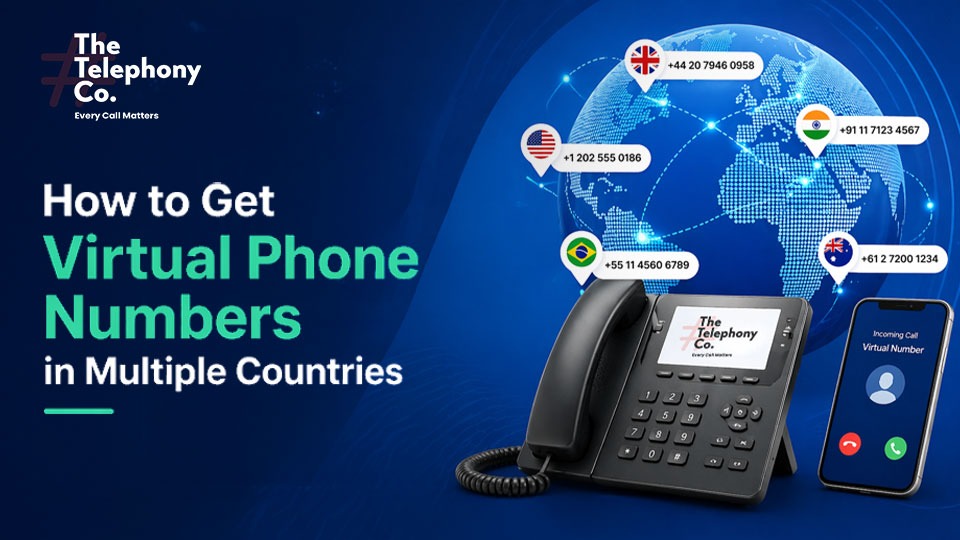
In today’s connected world, customers expect local businesses — wherever they are. Whether you are a startup entering new markets or a growing company with remote teams across borders, communication is your first impression.
The challenge? Setting up traditional phone lines in multiple countries is expensive, slow, and complicated. You need local numbers, local infrastructure, and local contracts — before you even speak to your first customer.
That is where virtual phone numbers change everything. With cloud telephony, you can get phone numbers in multiple countries within minutes — no offices, no hardware, no hassle. Just instant global presence.
What is a Virtual Phone Number?
A virtual phone number is a cloud-based telephone number that is not tied to a physical phone line or location. It works over the internet using VoIP (Voice over Internet Protocol) technology.
Unlike traditional numbers that require a SIM card or a fixed landline, a virtual phone number exists entirely in the cloud. Calls made to it are routed to any device you choose — a mobile, laptop, desk phone, or business VoIP system.
In simple terms: it looks like a local number to your customer, but works anywhere in the world for you.
Still Struggling with International Communication?
Simplify everything with one global virtual number platform
How It Works
The process behind virtual phone numbers is straightforward:
- A customer dials your virtual number in their country.
- The call travels over the internet to your cloud telephony platform.
- The platform instantly routes the call to your chosen destination — whether that is your team in London, a support agent in Dubai, or a softphone app on a laptop.
- The call connects in seconds, just like any regular phone call.
No physical lines. International charges. Complexity.
Types of Virtual Phone Numbers
Depending on your business needs, you can choose from several types of global virtual numbers:
- DID numbers (Direct Inward Dialling) — Standard local numbers assigned to specific extensions or team members.
- Toll-free numbers — Free for your customers to call. Great for customer service and brand trust.
- Local numbers — Numbers with a local area code in your target country, building familiarity with customers.
- Mobile numbers — Virtual numbers that appear as mobile lines, preferred in markets where mobile calls are more common.
Each type serves a different purpose, and most providers let you mix and match across countries.
Why Businesses Need Virtual Numbers
Getting virtual phone numbers in multiple countries is not just a convenience — it is a smart business strategy.
Build a global presence instantly. A local number in the US, UK, or Australia tells customers you are reachable in their market, even if your team is based elsewhere.
Earn customer trust. People are far more likely to call a local number than an international one. A familiar area code removes hesitation and increases contact rates.
Cut communication costs. Traditional international calling is expensive. Virtual numbers run over the internet, dramatically reducing costs — especially for businesses making or receiving high call volumes.
Support remote and distributed teams. Your team can work from anywhere while sharing the same virtual phone system. Calls route seamlessly to whoever is available, wherever they are.
Step-by-Step: How to Get Virtual Phone Numbers in Multiple Countries
Getting started is simpler than most businesses expect. Here is how it works:
Choose a reliable provider
Select a cloud telephony provider (The Telephony Co) with strong global coverage, good uptime guarantees, and responsive support. Look for providers with numbers available in the countries you need.
Select your target countries
Choose which countries you need virtual numbers in. Most platforms let you pick numbers from a list of available regions — local, national, or toll-free.
Choose your number type
Decide whether you need local numbers, toll-free lines, or DID numbers for individual team members. Match the number type to your business purpose in each country.
Set up call routing
Configure where incoming calls should go. You can route calls to a specific team member, a ring group, a call centre, or even an automated IVR menu — depending on your setup.
Integrate with your existing system
Most providers offer easy integration with CRM tools, softphone apps, Microsoft Teams, and business phone systems. Connect your virtual numbers to your existing workflow with minimal technical effort.
Key Features to Look For
Not all virtual number providers are equal. When comparing options, prioritise these features:
- Global coverage — Can they provide numbers in all the countries you need, now and as you grow?
- 99.9% uptime — Downtime means missed calls and lost business. Reliable infrastructure is non-negotiable.
- Low latency and HD voice — Call quality matters. Choose providers with optimised networks for clear, delay-free audio.
- Security and compliance — Look for TLS/SRTP encryption, fraud protection, and compliance with local telecom regulations.
- Easy integration — Your virtual numbers should connect smoothly with your CRM, helpdesk, or existing VoIP system.
Benefits of Using a Global Provider
Working with a single global provider for all your virtual phone numbers — rather than juggling multiple local vendors — brings real operational advantages:
Centralised communication management. One dashboard to manage numbers, routing rules, call logs, and analytics across every country.
Easy scalability. Add a new country or a new number in minutes. No contracts to sign, no engineers to call, no delays.
Better customer experience. Consistent call quality and routing means customers always reach the right person, in the right team, at the right time.
Cost efficiency. Consolidating with one provider removes hidden fees, currency complications, and the administrative overhead of managing multiple vendor relationships.
How The Telephony Co Helps You
The Telephony Co makes it straightforward for businesses of any size to get virtual phone numbers in multiple countries — without the complexity or the cost of traditional telephony.
Here is what you get:
- 60+ countries covered — Get local, toll-free, and DID numbers across six continents, with new regions added regularly.
- 99.9% uptime SLA — Your business stays reachable around the clock, backed by a geo-redundant global network.
- 24/7 customer support — A dedicated support team is available whenever you need them, with real people — not just chatbots.
- Secure calling as standard — All calls are protected with TLS signalling and SRTP media encryption.
- Quick, simple setup — Most customers have their first virtual numbers live within the same business day, with no specialist IT knowledge required.
Whether you are testing a new market or scaling an established operation, The Telephony Co gives you the infrastructure to communicate like a local — everywhere.
Conclusion
Getting virtual phone numbers in multiple countries no longer requires physical offices, complex contracts, or large upfront investment. With cloud telephony, any business can establish a credible local presence in new markets within hours.
From building customer trust with familiar local numbers to supporting remote teams across time zones, global virtual numbers give your business the flexibility and reach it needs to grow. The technology is simple, the costs are low, and the impact on your customer relationships can be significant