

Companies adopt new technologies to advance their business communication and make their calling process easier. Many businesses are now shifting from traditional phone systems (landline phones) to VoIP (Voice over Internet Protocol).
Before making the switch, it is important for businesses to know whether VoIP is the right choice for them or not. It is essential to understand the benefits and drawbacks of VoIP before shifting, because it is not necessary that VoIP will be beneficial for every business.
In this article, we will take a deep look at the advantages and disadvantages of VoIP, along with its features and what to keep in mind before making the switch — so that businesses can decide whether VoIP is the right choice for them.
What Is a VoIP Phone System and How Does It Work?
Before understanding the advantages and disadvantages of VoIP, it is important to know what a VoIP phone system is, how it works, and why it has become essential for all types of businesses, from small to mid-sized.
A VoIP phone system is an advanced calling communication technology that makes calls through the internet. It does not require any type of wiring or physical lines like a traditional phone system. Unlike a traditional phone, a VoIP phone can also connect with other devices such as a phone, tablet, laptop, desktop, and computer to make and receive calls — which makes it a very flexible phone system.
How Does VoIP Work?
Voice Conversion When you speak, VoIP (VoIP Over IP) technology converts your voice into small digital data packets that can be sent over the internet.
Data Transmission These digital data packets are transmitted over the internet in real time from one device to another, no matter where you are in the world.
Voice Output Once the data packets reach the other end, they are instantly converted back into a clear voice signal that the other person can hear naturally — just like a regular phone call.
Manage Every Conversation from One Powerful Platform
 Unified Communication
Easy Scalability
Reliable Connectivity
Unified Communication
Easy Scalability
Reliable ConnectivityUpgrade Outdated Phone Systems with Modern VoIP Business Solutions Today
Better Flexibility and Scalability
Crystal Clear Voice Quality
Reduced Maintenance CostsTop VoIP Advantages for Small and Large Businesses
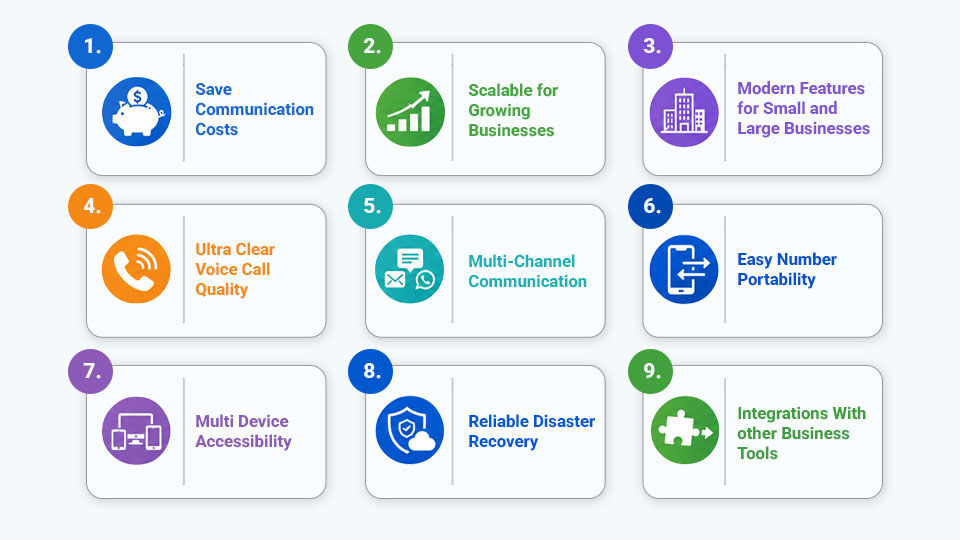
There are many advantages of using VoIP for business communication. Compared to a traditional landline phone system, VoIP clearly stands out as the better choice. Here are some of the key advantages of VoIP for businesses.
Save Communication Costs
The biggest advantage of VoIP is that it reduces a company’s calling and communication costs by 50% to 60% compared to a traditional phone system, which is a very big saving for any business. With VoIP, the need for costly landline hardware, equipment, and wiring is completely eliminated. Another big advantage is that VoIP also significantly reduces international calling costs, which is a major benefit for businesses that make a large number of international calls.
Scalable for Growing Businesses
From a business perspective, VoIP phone systems are highly scalable, allowing you to easily add or remove numbers and lines without spending any extra money. With VoIP, there is no need for new hardware, new wiring, or a hardware engineer — everything is managed by the VoIP service provider, which makes it very easy to maintain and operate.
Modern Features for Small and Large Businesses
Businesses need advanced features that help them provide better solutions to their customers. That is why VoIP brings a complete package of modern features including multi-level IVR, intelligent call routing, call transfer, call forwarding, call analytics, and powerful AI-powered features such as real-time call transcription and call summaries.
Ultra Clear Voice Call Quality
The call quality of VoIP cannot be compared to traditional phone calling. With a high-speed broadband internet connection and a reliable VoIP provider, VoIP delivers voice quality in high definition (HD). During a call, the agent does not have to face any type of background noise, disturbance, or echo — which creates a better and more professional communication experience.
Multi-Channel Communication
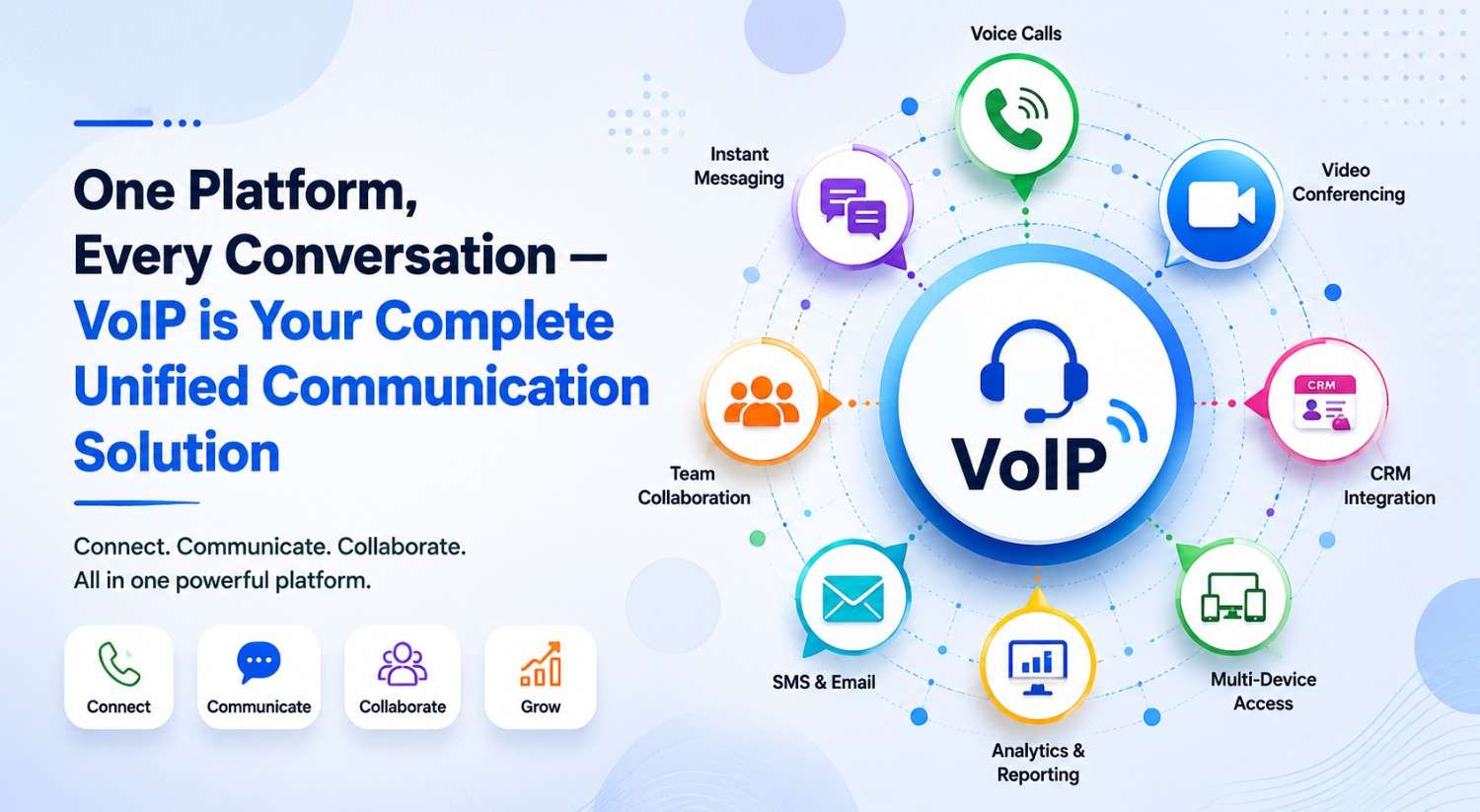
VoIP service is not limited to calling only — it is a complete unified communication solution that includes messaging, video calls, document and product deck sharing, and team meetings, all without switching to any other app or software. With The Telephony Co as your cloud telephony provider, businesses get unlimited voice and video calls, global VoIP phone numbers, chat, email, CRM and SMS service — all included in a single package at a low and affordable price.
Easy Number Portability
These numbers are fully portable and are known as virtual phone numbers. The biggest advantage of this is that you can use your number from anywhere in the world. Even if you are shifting your business to another country or state, your business can still keep its VoIP number without any issue. The Telephony Co provides number portability — if you want to port your current VoIP phone number to our service, you can do it easily and without any hassle.
Multi Device Accessibility
Compared to a traditional phone system, a VoIP phone is much more flexible — it can work on any device including a desk phone, laptop, smartphone, tablet, and desktop. This is especially beneficial for businesses whose teams work across multiple locations or remotely, as they can log in to their account on any device from anywhere.
Reliable Disaster Recovery
VoIP is a cloud-based service — which means that even if there is an earthquake, fire, flood, or any other major disaster, your business communication will not be affected. If a major problem occurs, all VoIP numbers can be redirected to other numbers or devices, ensuring that your work never stops.
Integrations With other Business Tools
Today, advanced VoIP phone systems can easily integrate with other important business tools and software such as CRM (Customer Relationship Management), marketing tools, email platforms, and other related software. This integration enhances customer communication and makes the overall workflow much easier and more efficient.
Disadvantages of VoIP
When a technology has advantages, it is natural that it also comes with some disadvantages — and VoIP is no different. However, these are disadvantages that businesses can easily solve and overcome.
Complete Dependence on a Reliable Internet Connection
As we have already mentioned, VoIP requires a good internet connection, and the quality of your calls also depends on your internet speed. This means that wherever your office is located, a fast and reliable internet connection is essential. If your internet is not good or reliable, your call quality will be poor and calls will keep dropping. Therefore, VoIP is not the right choice for businesses that do not have access to a better broadband internet connection.
Service Interruption During Power Cuts
Unlike a traditional phone system that does not require electricity, VoIP needs a continuous power supply — as soon as the electricity cuts off, the VoIP service stops working. However, in today’s time, all businesses have a power backup in place and most companies no longer provide desktop systems to their employees — which is why a power cut does not cause any major problem for VoIP communication.
Not All VoIP Providers Support Emergency Call Services
One of the lesser-known disadvantages of VoIP is that not all VoIP providers support emergency call services. In some cases, emergency services may not be able to trace the exact location of a VoIP caller, which can cause delays in emergency situations. This can be a serious concern for businesses and individuals who rely on VoIP as their primary phone system.
VoIP Advantages and Disadvantages: A Complete Comparison
| Features | Advantages of VoIP | Disadvantages of VoIP |
| Cost & Pricing | VoIP reduces communication costs by 50% to 60% compared to a traditional landline system | Certain features and services may carry extra costs beyond the standard pricing |
| Scalability | Easily add or remove users, numbers, and locations without any extra hardware or cost | Rapid scaling may require a stronger internet connection and better network infrastructure |
| Call Quality | Delivers high-definition voice quality with no background noise, disturbance, or echo | Call quality depends on internet speed |
| Multi-Device Support | Works on any device including desktop, laptop, smartphone, and tablet from anywhere in the world | Device compatibility issues may arise with older hardware or operating systems |
| Number Portability | Keep your existing phone number and use it from anywhere in the world without any hassle | Number porting process may take some time depending on the current provider and region |
| Unified Communication | Includes messaging, video calls, file sharing, and team collaboration all in one single platform | Some unified communication features may require additional configuration or subscription |
| Disaster Recovery | Cloud-based system ensures business communication continues even during emergencies or disasters | Full disaster recovery depends on internet and power availability at the backup location |
| Internet Dependency | VoIP uses the internet which allows calls to be made from anywhere across the globe | Complete dependence on internet means any network issue can disrupt the entire communication system |
How to Switch to VoIP and How to Choose the Right VoIP Service Provider
Switching to a VoIP phone system is one of the smartest decisions a business can make. It is not only cost-effective but also easy to set up and manage. Here is a simple step-by-step guide on how to switch to VoIP and how to choose the right VoIP service provider for your business.
How to Switch to VoIP
Check Your Internet Connection Before switching to VoIP, make sure your internet connection is fast and reliable. A high-speed broadband connection is essential for clear and uninterrupted VoIP calls.
Choose the Right VoIP Plan Every business has different communication needs. Choose a VoIP plan that fits your business size, budget, and requirements — whether it is a pay-as-you-go, monthly, or unlimited calling plan.
Port Your Existing Number You do not need to change your existing phone number when switching to VoIP. Simply port your current number to your new VoIP service provider and keep your business number as it is.
Download the App or Set Up the Device Once you have chosen your VoIP provider, simply download the desktop or mobile app provided by your service provider. There is no need for any wiring or technical setup.
Train Your Team Before going live, make sure your team is familiar with the new VoIP system. Most VoIP providers offer easy-to-use interfaces that require very little training.
Go Live Once everything is set up and your team is ready; you can go live with your new VoIP system and start making and receiving calls immediately.
How to Choose the Right VoIP Service Provider
- Check the Features Offered Make sure the VoIP provider offers all the features your business needs such as call forwarding, call routing, auto attendant, video calling, and other advanced communication tools.
- Compare Pricing and Plans Look for a VoIP provider that offers transparent and affordable pricing. Compare different plans and choose the one that gives you the best value for your money.
- Check Call Quality and Reliability Always check the call quality and uptime guarantee of the VoIP provider. A reliable provider should offer high-definition call quality and a strong uptime guarantee.
- Look for Scalability Choose a VoIP provider that can grow with your business. The provider should allow you to easily add or remove users, phone numbers, and locations as your business expands.
- Check Customer Support A good VoIP provider should offer 24/7 customer support. Make sure the provider has a responsive and helpful support team that can assist you whenever you need help.
- Read Reviews and Testimonials Before making a final decision, read reviews and testimonials from other businesses that have used the provider. This will give you a better idea of the provider’s reliability and service quality.
Connect Teams Faster with Modern VoIP Communication
Conclusion
VoIP is no longer just an option for businesses — it has become a necessity in today’s fast-moving world. With benefits like cost savings of up to 50% to 60%, easy scalability, advanced features, HD call quality, multi-device accessibility, and reliable disaster recovery, VoIP clearly stands out as the smarter choice over traditional landline systems.
Yes, VoIP does come with a few challenges such as dependence on a reliable internet connection, service interruption during power cuts, and limited emergency call support in some cases. However, these challenges can be easily managed and overcome with the right planning and the right service provider.
Before making the switch, it is important for every business to evaluate its communication needs, check its internet infrastructure, and choose a VoIP provider that offers the best features, reliability, and support.
The Telephony Co is one of the best VoIP service providers, offering reliable, feature-rich, and affordable VoIP solutions designed for small to mid-sized businesses. Whether you are just starting out or looking to upgrade your existing communication system, The Telephony Co has the right VoIP solution for your business.
Make the smart switch to VoIP today and take your business communication to the next level.